
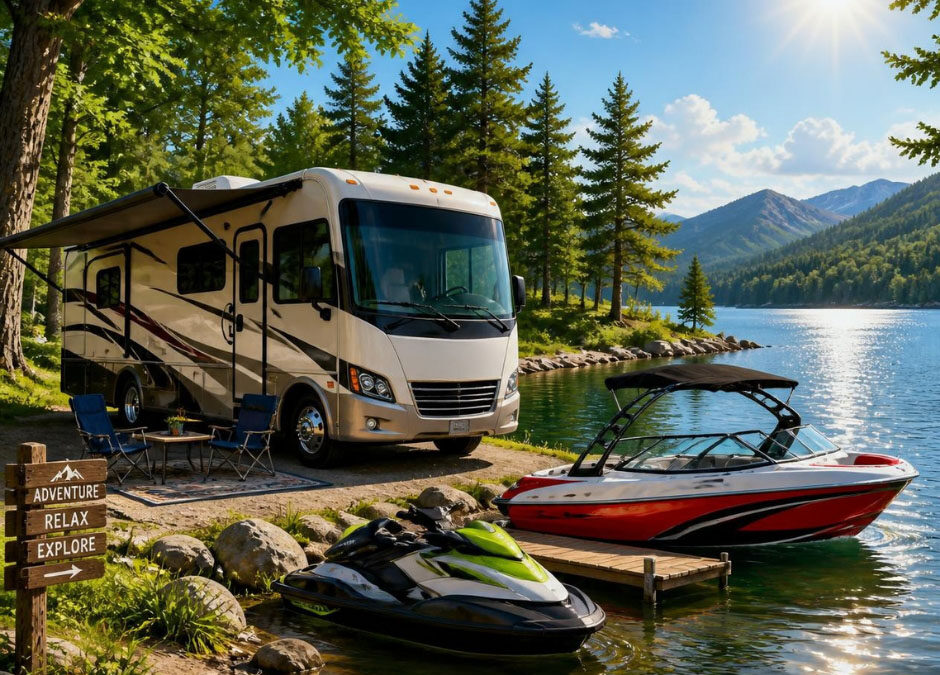
As autumn approaches in Massachusetts, seasonal outdoor recreation comes to a close. Whether spending weekends navigating New England highways in an RV, operating a powerboat on regional waterways, or riding a motorcycle through Middlesex County, taking time to prepare and store seasonal equipment helps preserve mechanical performance and asset value.
Skipping winterization procedures can lead to expensive springtime repairs, including cracked engine blocks from trapped moisture, dead batteries, and pest infestations.
Below is a practical checklist for winterizing boats, RVs, and recreational vehicles before cold weather arrives in the Northeast.
Complete System Flush and Winterization
Trapped moisture poses a significant threat to marine craft and RVs during freeze-thaw cycles. When water freezes, it expands, placing pressure on plumbing, valves, and engine manifolds that can result in structural cracks.
Boat Winterization Steps
-
- Drain Water Systems: Empty all raw-water cooling systems, holding tanks, and live wells.
- Apply Marine Antifreeze: Run marine-grade, non-toxic antifreeze through internal engine cooling lines to protect components from sub-zero temperatures.
RV Plumbing Winterization
-
- Empty Holding Tanks: Drain freshwater, grey water, and black water tanks completely.
- Distribute Antifreeze: Bypass the water heater unit and pump non-toxic RV antifreeze through the plumbing system until it reaches every faucet, toilet, and shower fixture.
Fuel System Treatment (All Engine Types)
-
- Add Fuel Stabilizer: Fill gas tanks to approximately 95% capacity and add a quality fuel stabilizer. Run the engine for 5 to 10 minutes to circulate treated fuel through lines, injectors, or carburetors. This step prevents fuel breakdown, phase separation, and varnish accumulation during months of inactivity.
Battery Care and Electrical System Maintenance
Batteries left connected during extended storage lose charge over time. In freezing New England temperatures, a discharged battery can freeze, swell, and rupture.
-
- Disconnect Power: Remove the negative terminal connection to stop small electrical draws. If storing equipment in unheated facilities or outdoors, remove batteries entirely and store them on a wooden surface in a climate-controlled room.
- Maintain Charge: Connect stored batteries to a smart trickle charger or maintainer. These units monitor voltage levels and deliver regulated power without overcharging.
Pest Deterrence Measures
RVs, boats, and motorcycles in winter storage provide shelter for rodents and insects. Pests can create severe damage by gnawing on wiring harnesses, upholstery, and plastic lines.
-
- Deep Clean Interiors: Remove all food items, canned goods, trash, and paper products from RVs and boat cabins. Vacuum seating surfaces, carpets, and storage bays to eliminate crumbs and residual scents.
- Seal Entry Points: Inspect undercarriages and exterior walls for openings or vent gaps. Seal small entry points using stainless steel or copper mesh.
- Deploy Repellents: Place peppermint oil, cedar blocks, or commercial pest repellents throughout interior bays to deter animals.
Protective Covers and Tire Care
Exposure to winter snow loads, ice, and UV light can degrade exterior coatings, seals, and rubber compounds.
-
- Use Breathable Covers: Select fitted, breathable covers designed for your specific boat, RV, or motorcycle model. Do not use standard plastic tarps; tarps trap moisture, promoting mold, mildew, and corrosion underneath.
- Protect Tires and Suspensions: Inflate tires to recommended storage pressures. Park RVs and trailers on wooden boards or leveling pads rather than directly on cold concrete or damp ground. For motorcycles, use center stands or front/rear paddock stands to relieve suspension pressure and avoid flat spots.
Managing Recreational Vehicle Risks in Massachusetts
Following systematic winterization steps lowers the likelihood of mechanical breakdowns and wear. However, seasonal equipment stored in yards, driveways, or facilities still faces exposure to winter ice storms, fallen tree limbs, vandalism, or fire.
Reviewing policy coverage before storage helps confirm that comprehensive, collision, theft, and lay-up provisions align with your overall risk tolerance.
Contact John A. Pierce Insurance Agency in Winchester, MA, to review existing policy details, discuss seasonal lay-up options, or address questions regarding boat, RV, and motorcycle coverage.
Frequently Asked Questions: Seasonal Storage & Policy Coverage
Should seasonal insurance coverage be reduced while a boat or RV is in storage?
While collision coverage options can sometimes be adjusted when a vehicle is off the road, maintaining active comprehensive coverage during storage helps protect against non-collision losses such as falling tree branches, heavy snow accumulation, fire, or theft.
Why shouldn’t a standard plastic tarp be used for boat or RV storage?
Standard plastic tarps block air circulation and trap condensation underneath. Trapped moisture creates an environment that speeds up mold, mildew, rust, and paint finish damage.
What is the purpose of fogging an engine before winter storage?
Engine fogging involves spraying specialized oil into the intake while the engine runs, coating internal cylinder walls, pistons, and valves with a protective barrier. This layer blocks rust and corrosion on internal metal surfaces during extended disuse.
Local Insurance Support in Winchester, MA
John A. Pierce Insurance Agency
Serving Winchester, Woburn, Lexington, Arlington, and surrounding Middlesex County communities.
-
- Phone: (781) 729-3320
- Website: johnpierceinsurance.com
- Location: Winchester, MA